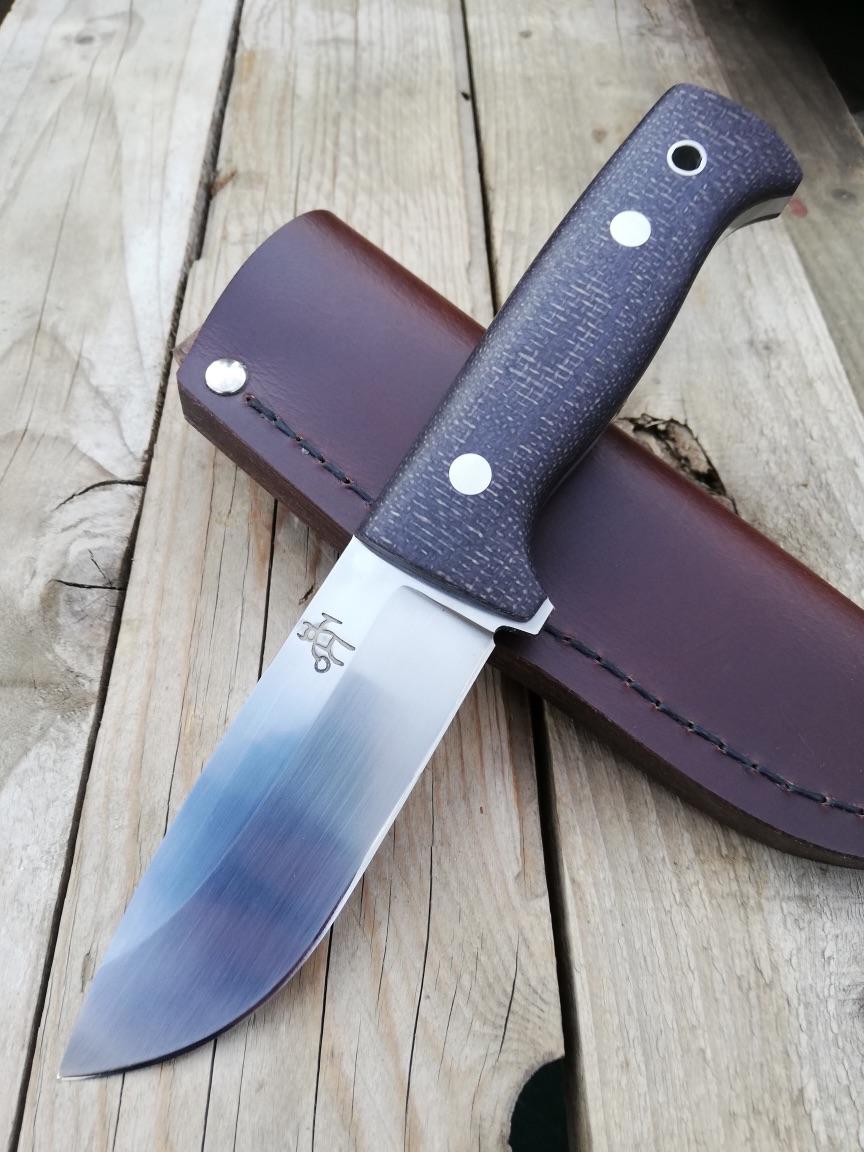
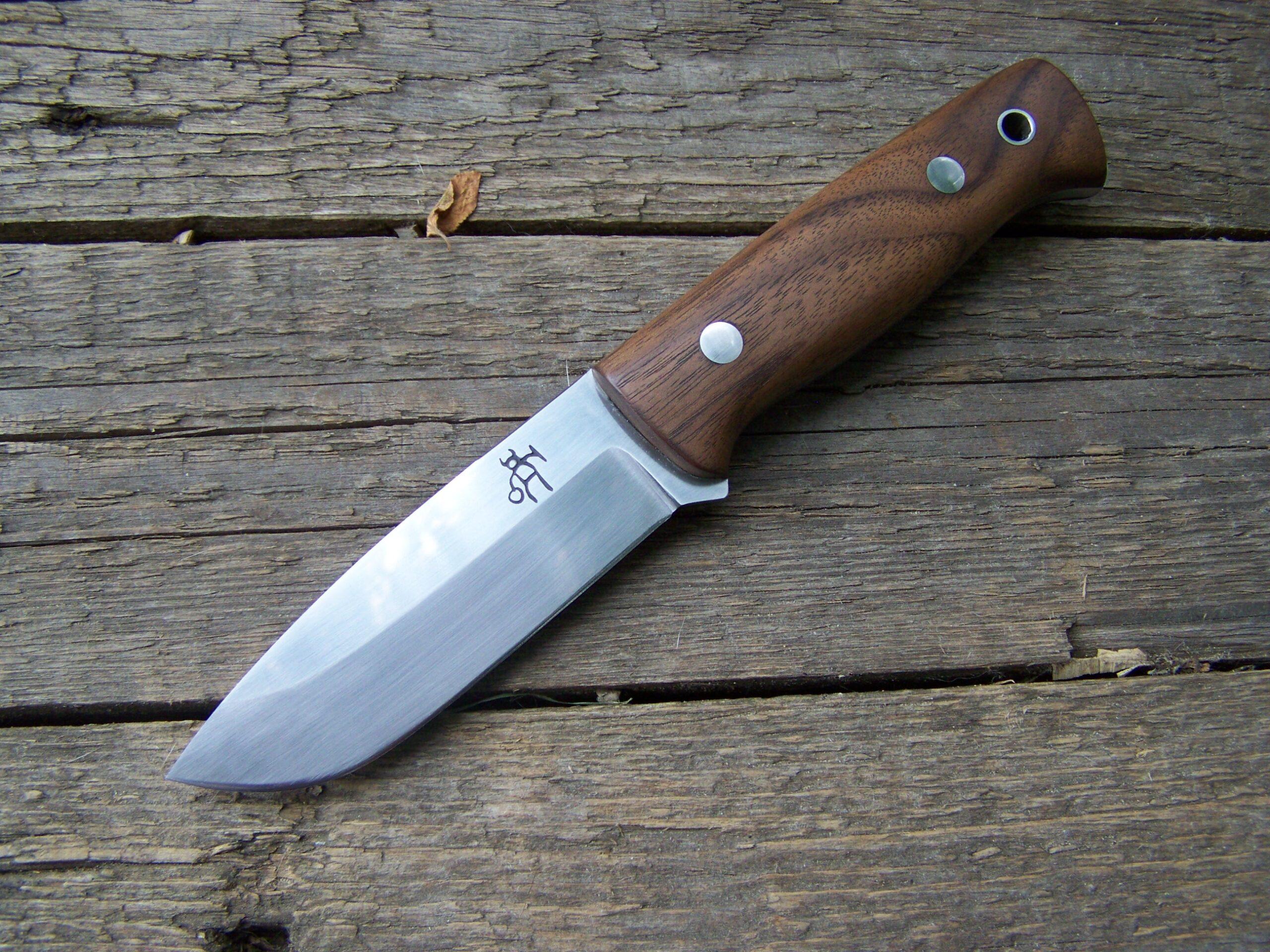
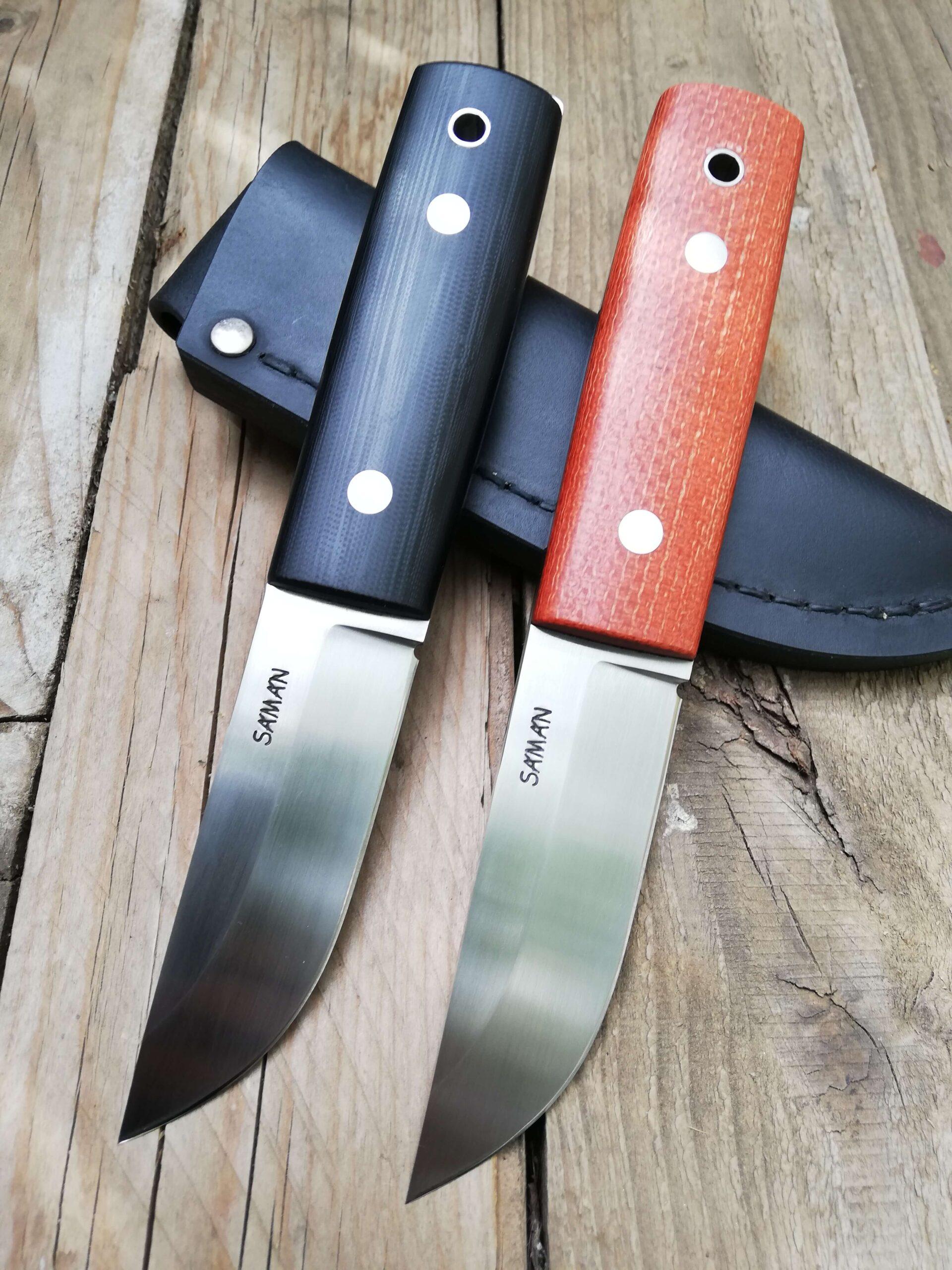
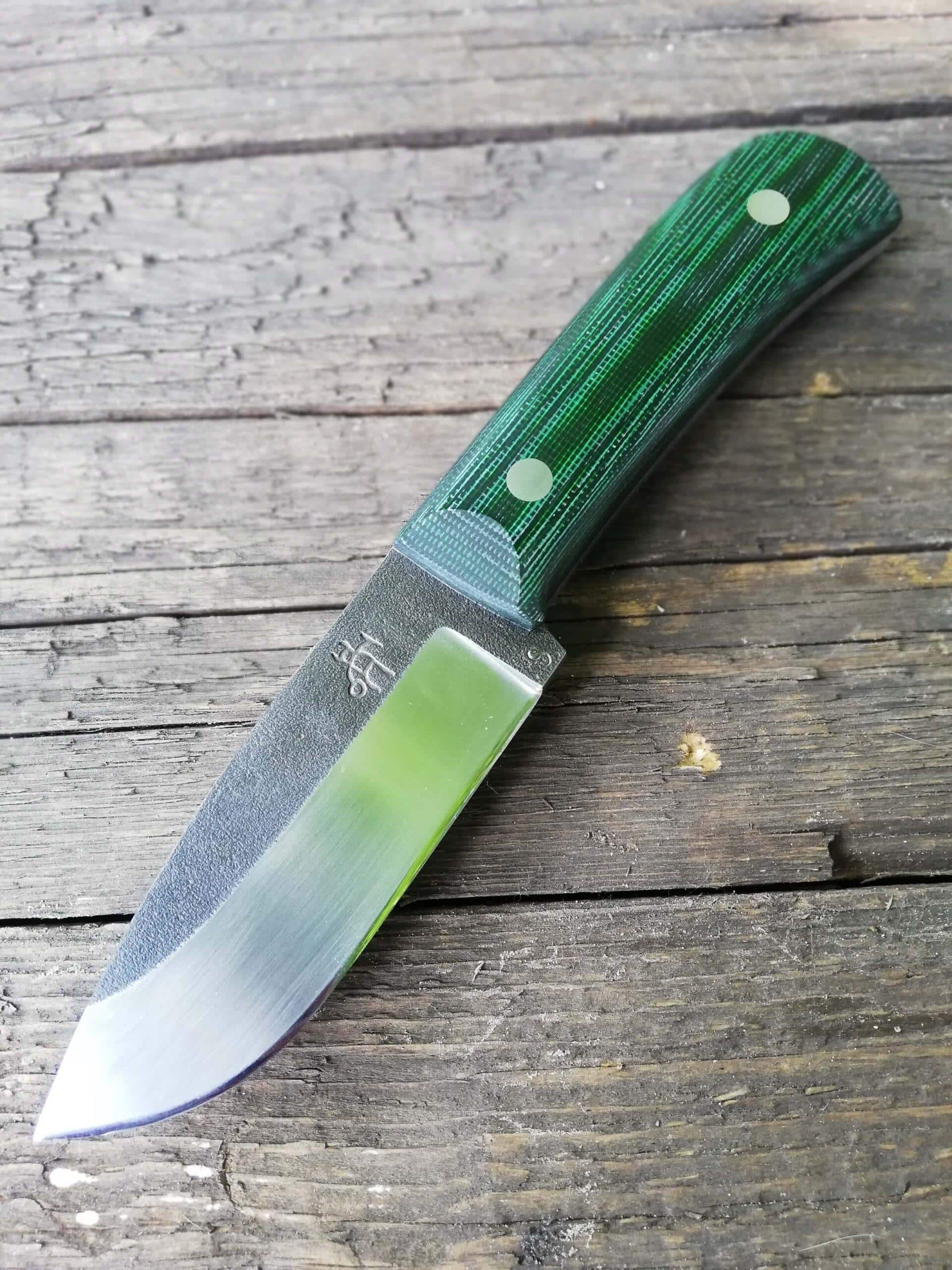
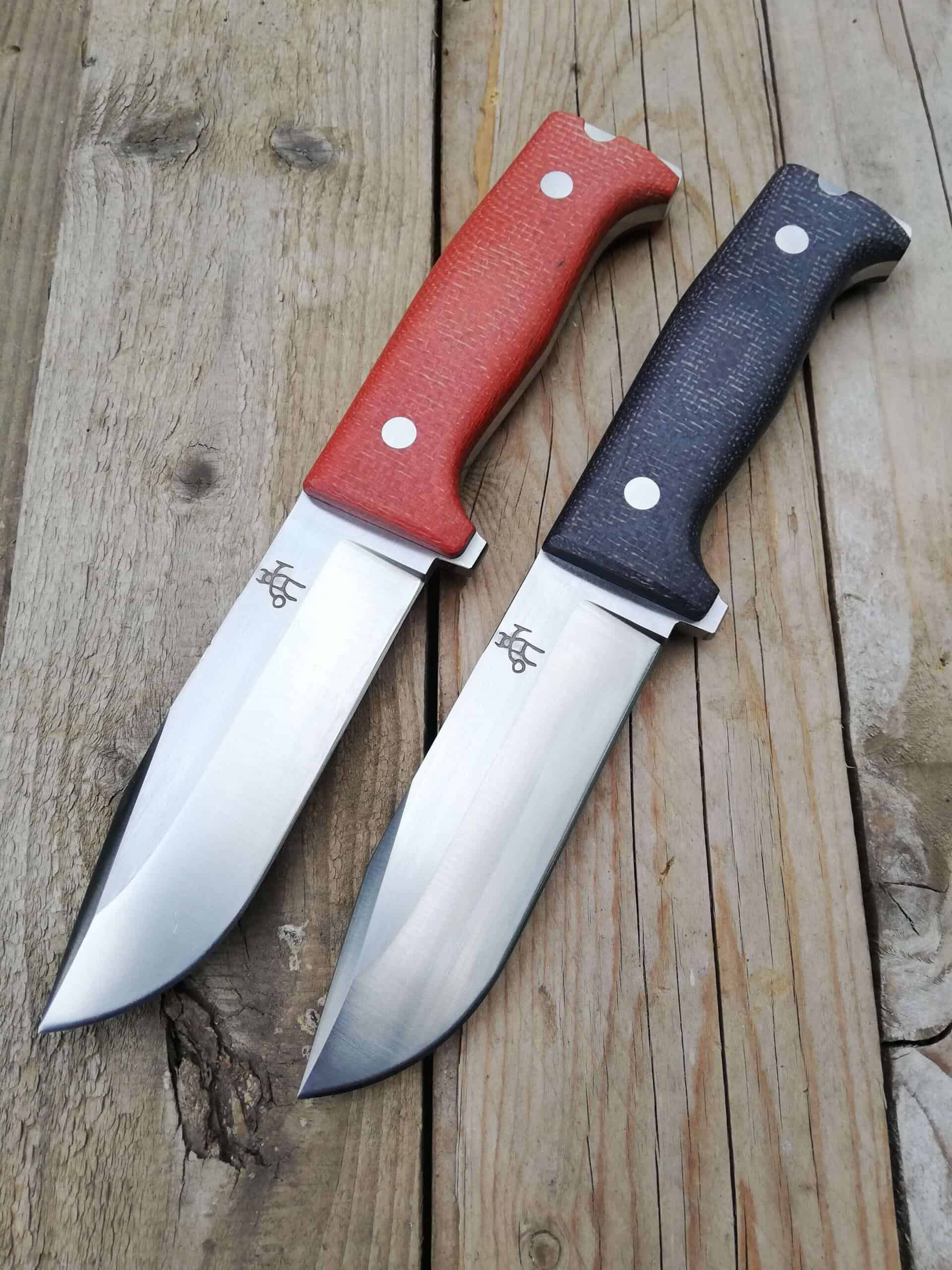
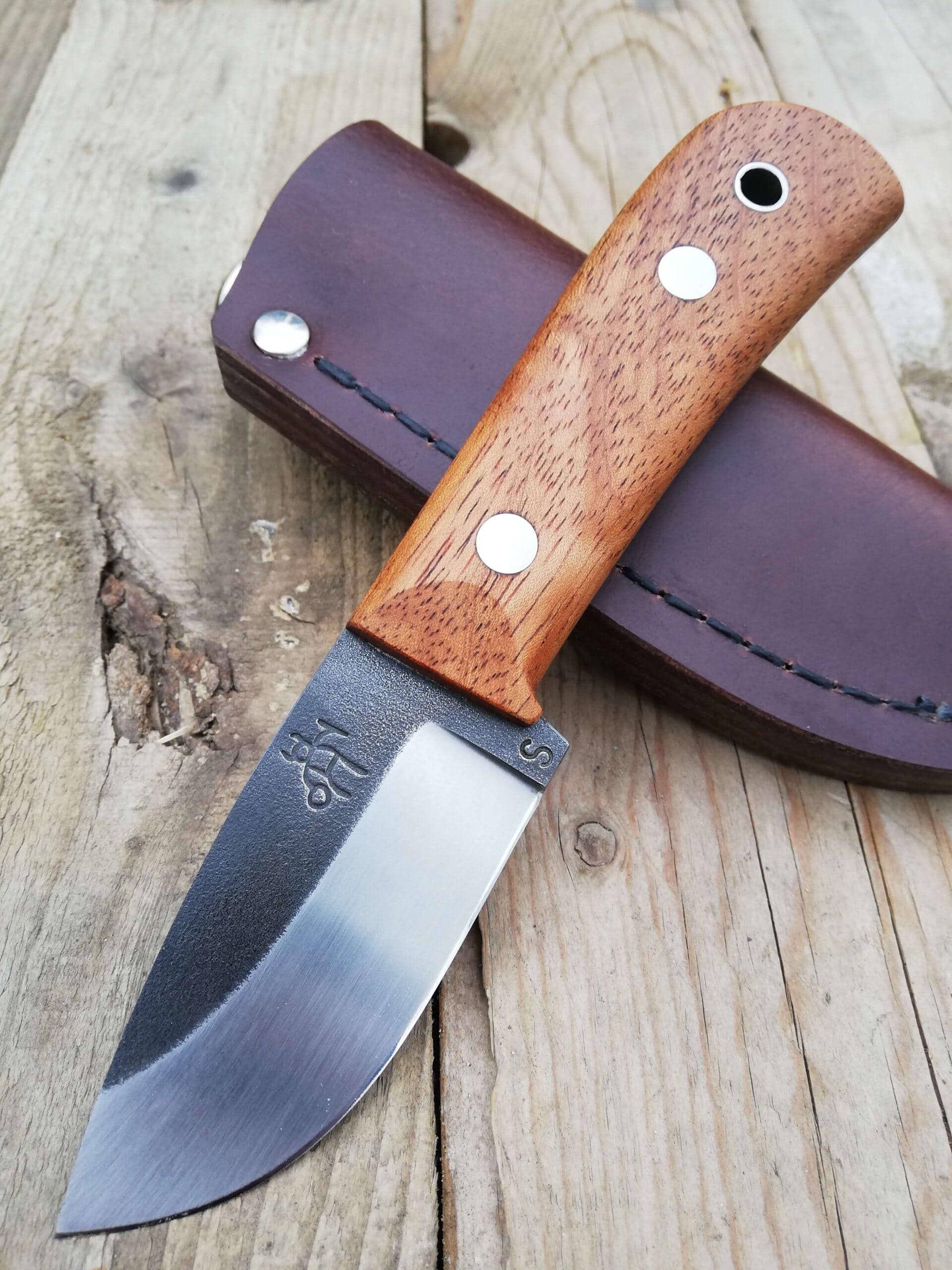
What makes a good bushcraft knife?
Blade control matters when carving, handle comfort matters over long sessions, and edge geometry and maintenance matter outdoors. No single blade length or geometry is ideal for every task.
Blade, steel and handle work together
When choosing steel, consider toughness, corrosion resistance and sharpening as well as edge retention. A secure, comfortable handle matters just as much. Ask the workshop about the options available for each Shaman model.
Knife steels and handle materials →
Bushcraft or a larger camp knife?
Start here for carving and detailed camp work. If your priority is a larger blade for heavier cutting, compare the camp knife models as well. Camp knives →
Frequently asked questions
Which bushcraft knife should I choose?
Start with the tasks you do most often: carving, camp cooking or processing wood. A comfortable handle and controllable blade are more useful than choosing the largest knife.
Is a bushcraft knife the same as a camp knife?
There is overlap. Bushcraft knives prioritise control for repeated hand work, while larger camp knives may suit heavier chopping tasks. Compare the intended uses of individual models.
Which Shaman model suits longer hikes?
The Nomad is described as a lightweight option that is easy to carry on a belt or in a backpack. Check the individual product details before ordering.
What is a Scandi grind?
A Scandi grind has broad bevels close to the cutting edge and is associated with traditional Nordic working knives. Edge geometry should still match the work and blade construction.
Can I choose the steel and handle?
The workshop offers choices of steel, handle and sheath subject to availability and agreement. Contact the maker for the exact options on your selected model.